Showing posts with label antiques. Show all posts

Sunday, August 22, 2010

Sequel: Prequel to the Air Mail House

What is it with this community? Within a couple of days after publication about the Air Mail house in North Hills, we heard from the owner of the other Air Mail house – the one that had apparently inspired it.

As you may recall from that previous post, the Coates family didn’t remember the exact location or know whose home it was that sparked their decision to hang their own flying mailbox landmark some 17 years ago. But now we know.

The home from which the Coates family borrowed the idea is on New Second Street in Elkins Park. Stephanie Phillips explains that about 20 years ago, “We were driving down a peninsula in Down East Maine, admiring the purple lupines.” She says when she saw a mailbox dangling from a high tree marked “Air Mail,” she giggled. “I thought, ‘What a nice thing to have.’ There are so many things not to smile about – here’s a happy thing.”

Phillips and her husband, tree surgeon Lewis Ruberg of Lewis Tree Care, are on their second airborne mailbox already. “It’s a recognition thing,” she says. Like Coates, they appreciate its value as a landmark on a busy street and enjoy the instant identification it provides to strangers and visitors.

And like the Coates family, they’ve been asked if their letter carrier really puts mail in it.

Those aren’t the only coincidences shared by the owners of these matching aerial adornments.

Like Drew Coates, Phillips is a professional. With her background in art history, Phillips has long consulted to a number of the area’s prominent nonprofits. Specializing in cultural travel and customized trip design, Phillips owns Globe Travel, which she says is the oldest travel agency in the Philadelphia area. “Actually, it owns me,” she quips. She marvels at the pleasant irony that in 1961, the agency that booked the trip Phillips took to Europe with her grandparents had been this very one.

Also like Coates, Phillips is drawn inexplicably to the unusual. A compulsive multi-tasker, Phillips’ favorite freelance job was the restoration and decorative repainting she gave Isabella, a lifesize cow that had been auctioned as a fundraiser for the Waco (Texas) Art Museum some years ago. Apparently Isabella had faded in the sun and salt air of Florida, where her owner had moved her. Phillips came to the rescue.

She says the scariest job she ever performed was a treatment she conducted on a fine English sofa that its owner had upholstered – unhappily, it turned out - in expensive, bright yellow silk damask. The owner was in her 80s, and, recalling a procedure once executed by her mother, recruited Phillips to apply this strategy to tone down the glaring color. So, at the owner’s insistence, Phillips reluctantly sprayed the sofa with iced tea. It worked.

Phillips is a serious cat lady. She’s the originator, some thirty years ago, and owner of Plants for Cats (sold locally at places like Primex and the Philadelphia Flower Show), the little packages of seeds you can plant to detour your felines away from other houseplants. Her household is ruled by a rescued mother-daughter cat team, and Phillips also collects all sorts of antique cat treasures.

Gardening is another of Phillips’ obsessions. She adores what she calls the “hodgepodge” of English gardens, and cultivates “the world’s most expensive salad bar” for the unintended benefit of the neighborhood wildlife. In order to counter her involuntary generosity, Phillips is desperately devising strategies – from Irish Spring soap mobiles to fences made from sparkly tinsel sticks scavenged from her son’s Bar Mitzvah centerpieces. Her latest effort, derived from the concept of a scarecrow, is a “scare deer.”

Guess it’s open season for talented homeowners who take pride in distinction and creativity. Anybody else?


Monday, March 29, 2010

A Treasure in Life's Collection


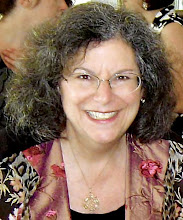
I have a note written by Shirley Sue Swaab, ASA dated 7.4.04. That summer I interviewed the vivacious and nationally renowned antiques expert, collector and appraiser for an article I was preparing about funeral practices and the art of writing obituaries.

A resident of Cheltenham Township, Swaab was on the program for an upcoming lecture at the historic Montgomery Cemetery in Norristown, speaking on the general topic, “To Die For: Funeral Customs of the Victorian Age.”

She was 82 at that time. Swaab was keeping a file of obituaries – She called it “People I Wish I’d Known.” Her note to me accompanied some materials she was graciously sharing. Her note read in part, “I can’t send you my own obit, as it’s not time yet to release it!”

With a grieving heart, I report that mournful time has now arrived.

On March 21, 2010, Shirley Sue Swaab passed away. I learned of this profound loss through the Cheltenham Township Adult School, on whose Board the dynamo served for over 49 years until her sudden death. Along with her family, her colleagues in the American Society of Appraisers and everywhere else she made her mark, her friends throughout CTAS were devastated and stunned.

You wouldn’t generally use the term “stunned” when a person of that age dies, but that’s part of the magic that was Shirley. As one friend commented, “She didn’t seem mortal.”

The day prior to her heart attack, Shirley delivered the feature lecture for the Victorian Society in America’s Philadelphia Chapter on “Dignity and Decadence” in the Victorian Period. The day she collapsed, she had just taken part in a ceramics study group. And she’d already arranged for two Adult School trips for the autumn of 2010. Shirley had just completed writing a book that had begun with her handout for a seminar, How to Be a Silver Detective.

Though Shirley never did give me her “advance” obituary, it’s cathartic to share some of her essence. In doing so, I rely partly on the public record, and partly on background from a second formal interview she gave me for an article on “collecting,” as well as on our relationship through the Adult School. Marsha Fischer, past president and continuing officer of Cheltenham Township Adult School, also contributed information and the Swaab family corrected what we got wrong.

Shirley’s reputation transcended local. Her lectures were often sponsored by such prominent institutions as the Smithsonian and the Rhode Island School of Design. Recipient of ASA’s George Sinclair Professionalism Award in 2007, Shirley always punctuated her seminars with wit and humor and she was known for demonstrating her talks with hands-on artifacts from her personal collections, instead of using slides. She created and ran for 60 semesters the very popular Antiques Seminar for Cheltenham Township Adult School, bringing in other experts each week. There was nothing else comparable. Her energy was enviable.

Born in Birmingham, Alabama, Shirley Sue Maring’s first college degree was in metallurgical chemistry. For some time, she worked in the corrosion department of Monsanto. She married in 1946. Her plans to complete a doctorate in the sciences were thwarted by a turf battle over transfer of credits. A second career was Christmas tree decorating, which she said proved too seasonal. She later turned to appraising. Textile restoration is what she planned for her 4th career "When [she] was too old to walk or talk,” she told her family. Shirley said she adored lecturing, because she loved sharing.

Meanwhile she remained happily married to Don for 64 years, raised four children, and became a significant party in the lives of her grandchildren. Six months before her death, Shirley asked math professor Marsha Fischer to recommend a good book on linear algebra so she could keep up with her grandson. Perhaps playing – and teaching - tennis also helped keep her young.
Shirley Sue was always dressed and groomed impeccably, bejeweled and made up to match what remained of her captivating Southern drawl.

Swaab’s collections ranged from the fine and serious (silver, porcelain, ivory, etc.) to the whimsical and “offbeat.” She was proud of her Victorian mourning jewelry, large black bloomers (like those worn by Queen Victoria) and “paper ephemera” – including funeral invitations. She also enjoyed collecting air sickness bags from the days when airline travel was luxurious and competitive and these items were artful or interesting. She even had a special cabinet made for the airline bags.

Research was one of the most compelling aspects of collecting for Shirley. “It’s part of my training in the scientific field. I like to go to the bottom of things, to know why, where they came from,” she told me. “What makes the articles tick?” Shirley called research and collecting “Joyful.”

Shirley was mentor and muse to all who knew her. She took a personal interest in promoting others, treating folks to homemade goodies and sending supportive letters and helpful clippings.

For example, there was the custodian who had a toothache. When Swaab realized that he would not be able to obtain dental care, she made an appointment for him with her own dentist.
Some years ago, I would have missed one of my favorite all-time writing gigs had she not told me about a particular job posting.

Everyone has stories to tell.

If you, like Shirley, are also keeping a file of People You Wish You’d Known, Shirley Sue Swaab would have to rank awfully high on your list.