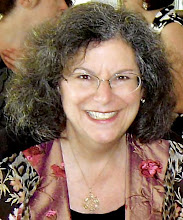
For a thoughtful approach to local environmental issues, you'll want to periodically drop by:
http://beverlymm.wordpress.com/2011/04/30/you-based-your-decision-on-what/
Beverly's experience and critical analyses raise valuable questions to ponder, even if you come away with a different viewpoint.
Showing posts with label environment. Show all posts
Showing posts with label environment. Show all posts
Sunday, May 15, 2011

Thursday, March 24, 2011
Toady Went A-Courtin' and He Did ... splat, uh oh!
 [Photo credit: Janet Lippincott]
I attended the press conference called by the rugged specimen of bufo americanus this past week.
At four years old, he still expects another 5-6 years in his lifespan. Yet he’d barely survived the first leg of a tortuous journey to the old Roxborough Reservoir and was concerned for both his return trip and the journey ahead that faced his offspring.
Toad began the press conference by thanking the Toad Detour committee – particularly the 5th District of the Philadelphia Police Department and the Philadelphia Streets Department, Toad Detour founder Lisa Levinson, and Parks & Recreation environmental education director Debbie Carr, among others – for recognizing that spring migration in the amphibian world is less flexible, by nature, than automobile traffic.
He offered some grim statistics, while the monitor panned over one hundred dead fellow creatures, squashed on Port Royal Avenue, around Hagys Mill Road and Eva Street. That was the body count on just one evening, March 6, when Toad Detour volunteer Judy Stepenaskie thought to go out for reconnaissance.
Thousands of Toad’s colleagues and relatives have been thoughtlessly mowed down annually, the potential mass slaughter fortunately reduced by the efforts of Lisa Levinson and the Toad Detour team she has assembled over the past three years, he said.
The monitor zoomed in on Levinson as Toad relayed her story.
Levinson was leaving work in the evening hours of April in 2007, and thought it peculiar to see so many leaves blowing across the street. “It isn’t fall,” she thought to herself.
When she realized she was observing a mass movement of toads, she said something to a law enforcement person who happened to be nearby.
On a second occasion, when Levinson saw cars racing over the neighborhood streets from Ridge Avenue crushing the animals, she rolled up her sleeves. She gestured to slow down oncoming cars while trying to help some of the toads make it across the street. Somebody called the police about a crazy lady in the middle of the road.
Meanwhile, enter Carr, from the former Fairmount Park system and Doug Wechsler, a researcher and photographer with the Academy of Natural Sciences. The Schuylkill Center, where many of the toads reside, Mobilization for Animals, Public Eye, Applied Ecological Services, several civic associations and concerned residents from Montgomery County and as far away as Phoenixville, also became involved.
On the third occasion, Levinson called the police herself. When the officer came, Levinson was administering to a dying toad in her hand. That officer grasped the larger issue.
When the ground thaws and winter snows give way to spring rains, toads awaken and climb out from their hibernation zones, a foot deep into the soil. Spring migration to the spawning pond commences.
“Mating migration is not restricted to the Roxborough area,” noted Toad.
“The dates aren’t set in advance,” explained Toad, deviating from his prepared remarks. “It varies from year to year, depending on the weather conditions. This year, we’re considerably earlier than recent years.”
As Toad continued, it became clear that he and his cohorts do not operate as toadily free agents, but in accordance with natural bio-rhythms they have little ability to control, much less fully understand. They respond to their essential role in the ecosystem, in which their diet keeps the insect population under control and their occasional life sacrifices naturally serve the population of owls and other wildlife.
“We’re allies for your gardens and farms,” declared Toad, as the press conference crrroaked on. “We’re vital pieces in the energy cycle of life.”
Since 2009, officially-sanctioned road blocks and vests are provided annually to Toad Detour volunteers at this time of year so they can detour traffic from the most heavily traversed migration paths.
Volunteers set up the Toad Detour from about 7:00 – 9:00 p.m. in the evenings.
“We’re nocturnal,” explained Toad. “And rainy nights are especially compelling for our challenging migration.”
Straying from his prepared remarks again, Toad added, “You should come over to see the terrain we navigate. You’d be toadily blown away by the walls we have to scale and the steep descent into the Reservoir area. We do awfully well with natural challenges, but these cars are just murder.”
Toad emphasized that the volunteers do their best, and do rescue thousands of animals. But such temporary and limited help still leaves many hours of mass crossings unprotected from automobiles.
“This is a round trip for the adult toads. But then, our eggs that turned into tadpoles in the Reservoir… They turn into toadlets. Two months from now, those little toadlets – the size of a fingernail – must cross over the road to get into wooded areas where they either mature or martyr themselves to nature’s food cycle.”
He concluded, “Toad Detour is working with policy makers to improve migration safety and educate the public. And Parks & Recreation is holding Toad Walks for fun and information. Contact www.toaddetour.com, 215-683-0218 or 215-685-9285.”
Wednesday, June 16, 2010
Transition's Coming: Take Part in the Planning

“At least I won’t be around to see it,” is one approach. Or non-approach, as the case may be.
“Technology and free enterprise will take care of it,” is another.
The folks committed to Transition Town in Cheltenham and Abington aren’t willing to take that risk.
The risky “it” looming ominously on the ever-closer horizon is the “ecological debt” – in the words of David Orr, distinguished author and professor at Oberlin College - that has been resulting from over-consumption of fossil fuels in the past 200 years. Orr explains that we’ve been “drawing down Nature’s capital – living beyond our [environmental] means.”
Ecological damage requires “a new energy paradigm,” according the CEO of Lloyd’s. Even one of the world’s pre-eminent insurance market specialists urges “governments to identify a clear path towards sustainable energy which businesses can follow.”
In its 2010 White Paper Sustainable Energy Security, Lloyd’s warns that the “old model” of reliance on fossil fuels is “outdated.” The study concludes that “energy security is now inseparable from the transition to a low-carbon economy.”
Transition Town is about planning for “descent” in energy use, putting conservation ahead of growth in consumption and using innovative strategies to reduce waste and nurture vibrant local economies. Transition Town projects are taking place all over the globe. [www.totnes.transitionnetwork.org and www.transitionus.org or, in progress: www.transitionnetwork.org; also www.CheltenhamTransition.org ]
“We want to make Cheltenham a sustainable community,” explains Wyncote resident Judith Gratz. Gratz has retired from her work at the Academy of Natural Sciences and Wissahickon Valley Watershed Association, but remains an environmental educator and consultant. No naive flower child, Gratz nevertheless emphasizes the importance of “living closely with basic environmental principles.”
Over 70 people attended a Transition Town working session at Curtis Hall on May 27. They came from Cheltenham, Abington, Jenkintown – from Philadelphia and New Jersey and beyond. Most of them believe in their power to make a difference at the local level. They met in interest groups to brainstorm ideas for transitioning to greater harmony with the environment. Energy, food, education, governance, health, transportation and livelihoods were among the organizing directions to which participants contributed their thoughts.
Transition Town doesn’t impose a plan on any community; instead, it’s a broad, inclusive framework through which interested citizens can come together and collaborate to reduce dependence on carbon-based energy. Outreach to and engagement of diverse organizations already operating in the community help propel meaningful, viable action plans.
Bill Mettler of Wyncote spoke of his vision for Cheltenham in the year 2020. It included the sweet aroma of freshly picked strawberries from neighborhood gardens and new yogurt produced by Ashbourne Farm, the former country club property. In his vision, green streets host more bicycles than cars, and rail stations now serve as cargo depots, as well as lively passenger sites. Walkable commercial streets are bustling with coffee houses, repair and recycling shops, and artisan studios. Children enjoy playing along clean creeks and parks. Fishing is attractive and Curtis Arboretum is stocked with nut trees for the public.
This isn’t just futuristic daydreaming, urges Judith Gratz. Choices belong to each of us each day. We don’t need to use plastic bags at all. We can eat more locally-grown vegetables and reduce our intake of the meats that require high-intensity, big-agriculture with its petroleum-based fertilizers, growth hormones and long distance transport. Gratz notes that the use of petroleum-based fertilizers for growing food accounts for about 35 percent of carbon emissions.
We can pass regulations to stop buses and trucks from idling their engines for an hour or two, fouling our air and our ears. Even the EPA ranks diesel exhaust as a major public health problem and urges schools (and other organizations) provide drivers with indoor space in which they can wait instead of idling. “There should be sidewalks throughout the Township, and bike routes where possible,” Gratz adds.
New developments can be required to set aside land for community gardens or trees for all to harvest; new construction could be expected to include adequate solar panels to generate a minimum amount of electricity or hot water.
The can do list is endless. And essential, in order to avert more catastrophes like the oil leak in the Gulf or the most recent Marcellus Shale explosion in western Pennsylvania.
At our house these days, we’ve been using a muscle-powered push reel lawn mower. It’s our green compromise with the toxic culture that still believes in golf course-style lawns. Meanwhile, we’re gradually moving toward more appropriate and resilient native flora.
What are you doing?
Transition Town’s Next Event: Alternative Modes of Travel Made Easy
Sunday, June 27: 4:00 – 7:00 p.m.
Robinson Park and Calvary Presbyterian Church
More Info: 215-896-7804 or www.TransitionCheltenham.org
Subscribe to:
Posts (Atom)