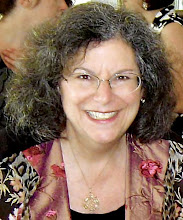
For a thoughtful approach to local environmental issues, you'll want to periodically drop by:
http://beverlymm.wordpress.com/2011/04/30/you-based-your-decision-on-what/
Beverly's experience and critical analyses raise valuable questions to ponder, even if you come away with a different viewpoint.
Sunday, May 15, 2011

Wednesday, April 27, 2011
Pondering Reconfiguration


Currently in the midst of school construction projects on buildings that would not have been cost-effective to renovate, the School District of Cheltenham Township is considering possible grade reconfiguration and decommissioning of particular facilities.
Rumors had been circulating as the district has been struggling with its budget. A presentation was made by Superintendent Darlene Davis to the school board’s facilities committee on April 5 and some of the notes from that meeting appear on the district website: http://www.cheltenham.org/files/264121/possible%20reconfiguration%20of%20grades-buildings.pdf
Two possible options are presented there at the time of this writing. Both have in common several elements:
• Moving toward a K-5 elementary configuration from the current K-4. This also changes the current grades 5-6 at Elkins Park Middle School and the 7-8 configuration at Cedarbrook.
• Moving toward a 6th grade center at Cedarbrook Middle School, separate from the 7th and 8th grades there. New construction of a 6th grade center would be part of a Cedarbrook addition.
• Moving the central administration offices out of the current administrative building into the current Elkins Park Middle School. This would open the administration building for sale or lease.
• Moving all Wyncote Elementary students, as well as its 5th grade, out of Wyncote and into the current Elkins Park Middle School. The reasons given for this is plan include that (1) Wyncote is too small to accommodate its 5th graders and (2) it would close an extra building, for financial savings.
Two different timelines are presented for the two options, which are contemplated to start phasing in as early as the 2012-2013 school year.
Public discussion is already underway, and school board president Tina Viletto emphasizes that there’s no fait accompli and that the process will be transparent.
No doubt, cost efficiencies and considerations of best pedagogical practices for middle school have already gone into the preliminary proposals by Dr. Davis.
This commentary poses some questions and calls for clarification to help improve the information gathering and assessment for judicious decision making.
Q: What are the population trends for school district enrollments? What are the current numbers for each of the four elementary schools? What are the expected numbers for each school’s 5th grade, for the next 5 years?
Pertinent Considerations: Once upon a time, Wyncote Elementary – and the other three schools – did house K-5. Granted, for most of that time, K was half-day, which freed up some space that isn’t available now. However, if the other three elementary schools can house their 5th graders, why can’t Wyncote? Is it so much smaller than the other schools? (How many classrooms, each? How many sections of each grade, each? Are cafeteria and gym spaces limiting factors?)
Q: Is it possible to put a map showing the current elementary schools and their catchment areas on the district website?
Pertinent Considerations: If Wyncote Elementary’s students attend Elkins Park School instead, there will be three of the four elementary schools southeast of High School Road below Church Road. Is that proportionate and balanced to the district population? Wouldn’t that require additional busing and family travel from the other sides of Old York Road and Washington Lane?
Q: What are the pros and cons of redistricting, with the elementary schools staying where they are and serving as many “walkers” as possible in these current locations?
Pertinent Considerations: With energy costs expected to take an increasing slice of the district’s budget and increasing environmental concerns, could redistricting maximize benefits of “neighborhood” accessible schools.
Q: How does the Cedarbrook Middle School facility actually compare with the Elkins Park facility and campus for both 7th and 8th grades and for construction of a new 6th grade center? What conditions still need significant renovation (and/or remedial maintenance) at both schools?
Pertinent Considerations: Once upon a time, Elkins Park and Cedarbrook housed 7th and 8th grades. If the district is looking to unload a second property, in addition to the administration building, which property (a) is more expensive to maintain and (b) would have greater market value – Wyncote Elementary, Elkins Park or Cedarbrook? Cedarbrook backs onto commercial and highway land, whereas the other schools are surrounded by residences.
Q: Exactly how separate is the new 6th grade center expected to be from the 7th - 8th grade school?
Pertinent Considerations: Will there be overlap in terms of educational program, staffing, the arts, lunchroom, gym, and extracurricular activities? This would seem to need significant detailing in order to properly design new construction and determine cost efficiencies.
Q: Are larger schools in the students’ best interests?
Pertinent Considerations: New construction at three of the four elementary schools and relocation of Wyncote to Elkins Park may also raise issues of equity for Wyncote families and staff. Since Wyncote students would not benefit from new construction, perhaps maintaining a smaller school population at Wyncote (assigning more students to the other new schools, while still adding 5th grade) would help compensate for what could be perceived as orphaned treatment?
Q: If part of the idea in reducing school buildings is to eliminate/reduce one extra administrative layer, does increasing the number of students at each school appropriately accomplish that?
Pertinent Considerations: Will increasing the size of each school’s population increase the need for greater supervision, administrative work and guidance in those schools?
Change is a constant in all school districts, and restructuring typically occurs within each generation. Of course, useful questions and responses will arise during the public’s consideration of the current proposals.
Tuesday, April 5, 2011
Flush with Bathroom Stories

My op-ed yesterday in a major urban newspaper about a recent entry on my list of memorable bathrooms drew some fun responses.
No doubt, each of us could tell some great stories. I invite yours.
Meanwhile, here's hoping the Hiway finds a real, enduring fix in their Ladies'.
Post your stories here, or send them to rapporules@gmail.com.
[Photo from my collection: On the aircraft carrier, USS Midway, in San Diego]
Thursday, March 24, 2011
Toady Went A-Courtin' and He Did ... splat, uh oh!
 [Photo credit: Janet Lippincott]
I attended the press conference called by the rugged specimen of bufo americanus this past week.
At four years old, he still expects another 5-6 years in his lifespan. Yet he’d barely survived the first leg of a tortuous journey to the old Roxborough Reservoir and was concerned for both his return trip and the journey ahead that faced his offspring.
Toad began the press conference by thanking the Toad Detour committee – particularly the 5th District of the Philadelphia Police Department and the Philadelphia Streets Department, Toad Detour founder Lisa Levinson, and Parks & Recreation environmental education director Debbie Carr, among others – for recognizing that spring migration in the amphibian world is less flexible, by nature, than automobile traffic.
He offered some grim statistics, while the monitor panned over one hundred dead fellow creatures, squashed on Port Royal Avenue, around Hagys Mill Road and Eva Street. That was the body count on just one evening, March 6, when Toad Detour volunteer Judy Stepenaskie thought to go out for reconnaissance.
Thousands of Toad’s colleagues and relatives have been thoughtlessly mowed down annually, the potential mass slaughter fortunately reduced by the efforts of Lisa Levinson and the Toad Detour team she has assembled over the past three years, he said.
The monitor zoomed in on Levinson as Toad relayed her story.
Levinson was leaving work in the evening hours of April in 2007, and thought it peculiar to see so many leaves blowing across the street. “It isn’t fall,” she thought to herself.
When she realized she was observing a mass movement of toads, she said something to a law enforcement person who happened to be nearby.
On a second occasion, when Levinson saw cars racing over the neighborhood streets from Ridge Avenue crushing the animals, she rolled up her sleeves. She gestured to slow down oncoming cars while trying to help some of the toads make it across the street. Somebody called the police about a crazy lady in the middle of the road.
Meanwhile, enter Carr, from the former Fairmount Park system and Doug Wechsler, a researcher and photographer with the Academy of Natural Sciences. The Schuylkill Center, where many of the toads reside, Mobilization for Animals, Public Eye, Applied Ecological Services, several civic associations and concerned residents from Montgomery County and as far away as Phoenixville, also became involved.
On the third occasion, Levinson called the police herself. When the officer came, Levinson was administering to a dying toad in her hand. That officer grasped the larger issue.
When the ground thaws and winter snows give way to spring rains, toads awaken and climb out from their hibernation zones, a foot deep into the soil. Spring migration to the spawning pond commences.
“Mating migration is not restricted to the Roxborough area,” noted Toad.
“The dates aren’t set in advance,” explained Toad, deviating from his prepared remarks. “It varies from year to year, depending on the weather conditions. This year, we’re considerably earlier than recent years.”
As Toad continued, it became clear that he and his cohorts do not operate as toadily free agents, but in accordance with natural bio-rhythms they have little ability to control, much less fully understand. They respond to their essential role in the ecosystem, in which their diet keeps the insect population under control and their occasional life sacrifices naturally serve the population of owls and other wildlife.
“We’re allies for your gardens and farms,” declared Toad, as the press conference crrroaked on. “We’re vital pieces in the energy cycle of life.”
Since 2009, officially-sanctioned road blocks and vests are provided annually to Toad Detour volunteers at this time of year so they can detour traffic from the most heavily traversed migration paths.
Volunteers set up the Toad Detour from about 7:00 – 9:00 p.m. in the evenings.
“We’re nocturnal,” explained Toad. “And rainy nights are especially compelling for our challenging migration.”
Straying from his prepared remarks again, Toad added, “You should come over to see the terrain we navigate. You’d be toadily blown away by the walls we have to scale and the steep descent into the Reservoir area. We do awfully well with natural challenges, but these cars are just murder.”
Toad emphasized that the volunteers do their best, and do rescue thousands of animals. But such temporary and limited help still leaves many hours of mass crossings unprotected from automobiles.
“This is a round trip for the adult toads. But then, our eggs that turned into tadpoles in the Reservoir… They turn into toadlets. Two months from now, those little toadlets – the size of a fingernail – must cross over the road to get into wooded areas where they either mature or martyr themselves to nature’s food cycle.”
He concluded, “Toad Detour is working with policy makers to improve migration safety and educate the public. And Parks & Recreation is holding Toad Walks for fun and information. Contact www.toaddetour.com, 215-683-0218 or 215-685-9285.”
Wednesday, March 2, 2011
Party With Purpose

Do you really have a more important commitment scheduled for 4:00-8:00 p.m. on Sunday, March 13?
A party has been planned for you, your family and friends by a collection of your thoughtful, dedicated and conscientious neighbors.
Imagine if partying could have saved the Titanic from sinking or if partying could cure cancer. Now imagine if partying could revive the economy, rebuild community, reduce environmental damage and reverse destructive energy policies.
Attending this party could help give you some tools to transform some of today’s depressing headlines into tomorrow’s hope and security.
At least that’s among the aspirations of the worldwide Transition Movement of which Transition Cheltenham is a part. March 13 celebrates the grand launch of the local collaboration, which in recent weeks came of age as one of 80 official Transition Initiatives in the U.S. and 352 internationally. Another 360 or so communities are in pre-official stages. Transition efforts are happening in 31 countries.
Transition Cheltenham joins Denver, Los Angeles, Portland (Maine), Ann Arbor, Montpelier (Vermont), Tucson, Pittsburgh, San Francisco, Palo Alto, NE Seattle, and Houston among prominent Transition communities that had already been mobilizing local sustainability efforts.
“The idea is to gather community, reach out, raise awareness, connect with groups already on the right path,” explained Beverly Maisey, an energy engineering consultant based in Wyncote and member of Transition Cheltenham’s initiating team.
Maisey recapped the one-and-one-half year process leading up to the March 13 launch party. Events included an “un-car picnic,” a “locavore banquet,” and a series of environmental workshops – for example on permaculture and on energy efficient (and even energy-producing) buildings and passive home design. “Gathering the Genius” events and “Sustainability Salons” also welcomed the ideas of all participants. Maisey estimated that 500-600 people have attended these events so far.
Kathy Hampton is Commissioner of Cheltenham’s Ward 4. She said she appreciates Transition Cheltenham’s perspective on how to change environmental habits to reduce the carbon footprint and reliance on fossil fuels. She said she hopes they can effectively educate the broader community in both environmental science and in how to make a difference at the household and policy level.
The Transition Cheltenham website – www.transitioncheltenham.org – has an impressive listing of resources, including films, to provide background information on carbon, climate, fuel, food and water, etc. The website also describes the various ongoing action committees open to all interested members of the public.
Free of charge, taking place at the cafeteria at Cheltenham High School, the March 13 party includes music, a special scavenger hunt, and of course, a cake. Guests will learn some Tai Chi and have a chance to express their creativity in the arts. They’ll feast on a potluck banquet – you’re asked to bring a dish and beverage to share, as well as your own “bowl, eatin’ irons and a cup.” The latter contributes to Transitioners’ goal of moving toward zero unnecessary waste.
Maisey emphasized that Transition Cheltenham is “all about the good of the community.”
Long-time environmental educator Judith Gratz echoed that sentiment with a metaphor about an old-fashioned bucket brigade to tame a fire. The future of a community depends on “an increasing number of people joining in and offering their ideas, skills, experience and wisdom,” she said.
“I’m eager to facilitate innovative projects such as roving work parties,” Gratz said. For example, she envisions “Cooperative gardening, in which small groups come together for a few hours to help each person with his/her garden from time to time as needed, or neighbors teaching each other simple skills – building a compost bin, and so on.” Gratz also hopes to facilitate meetings with experts on “best management practices to hold rainwater on our properties to reduce creek flooding, and then get funding to implement our plans.”
Commissioner Hampton emphasized the importance of putting theory into practice. She noted that Transition Cheltenham has some great ideas that “hopefully won’t just sit on a shelf collecting dust.”
These folks passionately believe in protecting our environment and in the power and value of community. Do you? They’re inviting you to a party. See you there.
Sunday, March 13, 4:00-8:00 p.m.
Cheltenham High School Cafeteria
(500 Rices Mill Road, Wyncote, PA 19095)
Sunday, January 23, 2011
The Party's Moving: SGS Paper Still Thrives


For real pinwheels on your toothpicks and the perfect-sized Chinese take-out box for your craft sale, or other goodies you never knew you needed, your store of choice is celebrating its new move.
Thirty-one years after the very weekend he opened his paper, invitation and party goods store in Wyncote, Barry Schwartz intends a new grand opening around February 16. SGS Paper Company has been perched since 1980 in a warehouse along the railroad track crossing where Rices Mill Road blends into Highland Avenue. Its new home is Glenside, only 1-1/2 miles northwest on Mt. Carmel Avenue, just before it hits Limekiln Pike.
Listening to Schwartz carry on about the festivities for the upcoming kickoff, you’d think he was planning a party for his beloved grandkids. Which may be the case as well. Afterall, the letters S.G.S. represent their mother’s name. Stephanie Gwen Schwartz, daughter of Barry and his wife, Monna, was very little when her eponymous store was born. (There is also a son, who became a graphic designer.) SGS remains a mom and pop place, a family enterprise, at which Stephanie now also works. Monna is the bookkeeper, who is joined in the office at least once a week by Schwartz’s 92 –year-old mother. “Her mind’s great, she looks fantastic and she still drives,” he said.
Other employees he considers family as well. “Dedicated, wonderful. No attitudes, no ego problems. We weeded all those out,” Schwartz laughed.
“It’s going to be a huge grand opening,” exuded Schwartz. “Free food, entertainment for the kids – a caricaturist, animal balloon specialist, face painters, maybe even a dunk tank! Remember those old booths you could go into, make a face and get a bunch of photos fast? We’ll have one of those,” he continued, on.
Then, he said, after they’ve re-opened, they’ll try to have these celebrations once a month. “We’re more than just a party store. We’re a fun place for children.”
Sometimes Schwartz teases that SGS means “specializing in great service.” Which is also true. Service seems to account in great part for the success of this retailer, when so few others remain standing past the first few laps.
“We try to listen to the needs of the customers. If they ask for a different line, or a particular theme, we’re happy to bring it in,” said Schwartz. “I like to think it’s the customers’ store.”
Over the years, for instance, SGS was increasingly stocking a wider selection than their competitors, and adding accessories and novel items to coordinate with an expanding array of party themes.
“You want Tikki Bar, we’ll get you your lighted palm trees,” Schwartz nailed his point.
SGS Paper typically fills 1000 helium balloons a week, he said. They do a lot of wedding invitations. They sell every imaginable size cooking tin made. Piñatas dangle from the ceiling to remind you how easy it is to party.
“We can’t make it on price alone, when there are mass merchandisers like Target, Costco and Sam’s Club,” he started outlining his apparently successful business strategy. “We need to be able to provide people with every possible color napkin, table covering, utensils, florals. Every kind and size of plastic wine glass – bowl, fluted, stems … If we don’t have it, you don’t need it.”
Another facet of his strategy is volume. Schwartz acknowledges the impact of the recession, which has cascaded from corporate downsizing and streamlined habits down the chain to caterers, restaurants and households. He says his own costs are “out of control,” with suppliers suddenly charging 15 percent more than six months ago for paper bags and some utility expenses jumping from $1600 to $2400 a month.
So he’s trading in what he calls the “air space” of the warehouse for a brighter, more accessible venue for merchandising. Most important, he’s abandoning a parking nightmare that accommodates five cars in exchange for a well-designed parking lot that holds closer to 50.
Schwartz started out working for Sweetheart paper manufacturer in Philadelphia. He eventually decided he wanted to do his own thing and started SGS Paper, aiming at both commercial and retail paper goods. Over the years, he said, he recognized an under-tapped market for retail party goods. Although he still delivers paper and cleaning supplies to commercial accounts and serves a substantial number of commercial caterers and restaurants, now 80 percent of his business is cash and carry.
This 64-year-old businessman has no plans to retire. “I love the interaction. Every day is different. It’s exciting to go to work every day.” He expects to play a larger role in the local chambers of commerce groups. And Schwartz concedes that he’s a pushover when schools organizations and scouts approach him for advertisements and donations.
“They help us make a living. We try to give back to the community,” he said.
It takes Schwartz little time to learn his customers by name, and he rarely forgets. “We are so grateful for the loyalty of our customers. I’m sure you remember your friends’ names,” he noted. “My customers are my friends.”
Tuesday, December 21, 2010
Community Mourns Dear Friend - Frank Sessa: 1947-2010
“You know, you do way too much of that,” Frank Sessa rebuked me, while we were chatting one day after he entered Hospice.
“Huh?” I asked, suddenly worried about what I might have done to provoke such a remark from my friend.
“Worry! You said you were worried. How does that help? Now cut that out!” he said in his crisp, authoritative way.
Sure enough, I’d been rattling on about some assignment I was working on and had mentioned a detail I’d been worrying about.
This friend never minced words. His comments were typically bold and incisive. So that particular piece of advice is among the most comforting memories I’ll always cherish.
Frank Sessa, 63, of Wyncote, chemist with multiple patents, tutor, guitarist, and 4th Dan karate instructor, passed away on Saturday, December 18, at Keystone House Hospice after a gritty fight with carcinoid tumor disease of the liver.
“A technicality,” he might have said, while acknowledging that it was a pretty significant one. The scientist with a wry sense of humor, Sessa was employed as an applications specialist with FMC Corporation in Center City at the time of his death.
Frank Sessa was no shrinking violet. His principles were crucial to him, and if pressed, diplomacy less so.
Once in the 1980s, when walking with his wife through London’s Piccadilly Circus, Sessa noticed a gang of kids surrounding a few teen tourists from Germany. Things weren’t right, he sensed, and then realized he was observing a robbery. Recounting the episode, he told me he took off running after the thugs, “thinking ‘I hope someone else gets there first ‘cause that guy has a knife.’” Sessa did get there first, interrupting – but too late to prevent - the crime and calling attention to the need for help. “I was pissed off,” he said later about his split-second response to help strangers in need in a foreign land.
Born August 3, 1947 in Stamford, Connecticut, Sessa grew up in Bridgeport with his twin brother, Lewis, and older sisters Cathy (Hunyadi) and Cynthia (Pound). The non-shrinking violet began to bloom during his years at Trumbull High School, while working part-time at Terrace Pharmacy.
The teen loved sports, playing on whatever teams he could. Although he’d landed a spot on the school football team when he was a freshman, he was cut the next year. Devastated but determined, he tried out again his junior year, and was again disappointed.
“Perseverance,” Sessa later taught his chemistry tutees and students at Glenside Shotokan Karate Club. He tried again senior year and made the team. “After two games, I was the starter. I was both offense and defense. I was not going to be denied. I was like a crazy man,” he said.
By the time he reached Southern Connecticut State University, he was focused. Because he got A’s in his classes, he was offered jobs as biology and chemistry lab assistant. He received his B.S., graduating with department honors in chemistry, after completing the honors program in 1970. His Masters of Science in materials science (1973) followed from a fellowship program from the University of Connecticut.
He met Mary Lou at a dance when she was a freshman in college. They clicked, and after dating for four years, married in the same Connecticut church – Assumption Church Fairfield - which he later selected for his funeral Mass.
In sentimental moments, he called her a “jewel” and said, “I’d never want anyone else.”
He said that watching his daughter, Stephanie, grow into a young lady “has been a delight.” It was when Steph was a young girl that she rekindled her father’s love of music. He’d taken classical guitar lessons in college, and eventually linked up with fathers of her friends.
Mary Lou, a vocalist in bands during her own youth, joined the mature group, Mid-Life Crisis, which performed pro bono for neighborhood gatherings and nonprofit organizations in the region.
Sessa credited his brother for introducing him to karate. He was instrumental in bringing to scale the fledgling karate club at the University of Connecticut. Perhaps his favorite aspects of karate were the tenets it teaches about life. He liked the adage about getting knocked down seven times and getting up eight times. “Karate is about you. You conquering you,” he said.
Those were pieces of the philosophy that also guided his coaching of girls’ softball for six years – along with friends and neighbors Mary Ann Goss and Peg O’Rourke - for the Glenside Athletic Association.
Sessa came to Philadelphia in 1977 as a research scientist with Betz Laboratories, which is where he was involved with the work that earned the patents in corrosion and deposit control. He also worked for a number of years at Stonhard, Inc. prior to arriving at FMC.
Friends remember the many times Sessa would come to their aid – whether on house projects or in times of personal grief.
Our family recalls some years ago when he traveled down to Virginia for a weekend to guide my husband through re-flooring a room in our daughter’s home. There were countless additional examples.
With other friends, he shared their heartaches as his own.
Frank Sessa was very there for his family and friends. Fortunately, his healthy voice will remain strong in our ears and his life will remain vibrant in our hearts and memories.
In lieu of flowers, contributions may be made to Fox Chase Cancer Center (333 Cottman Ave., Philadelphia, PA 19111) or to Friends of Frank & Family (c/o 114 E. Waverly Rd., Wyncote, PA 19095).
Subscribe to:
Posts (Atom)